Bringing health, hope, and the love of Christ to remote river communities
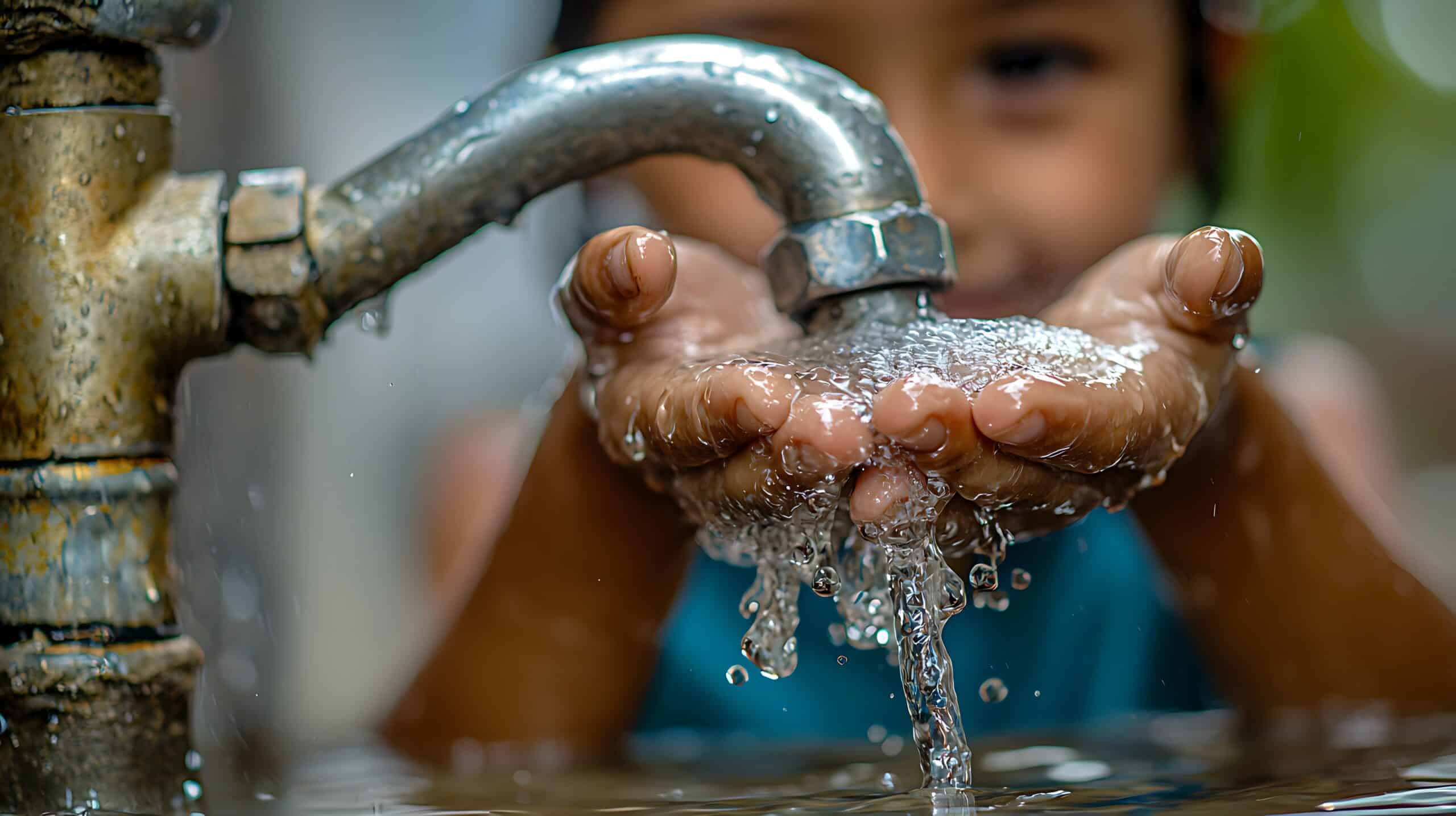
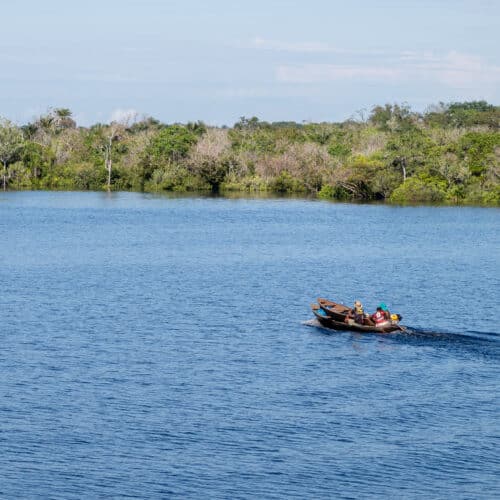
For many, the Amazon evokes images of endless rivers winding through lush rainforests. But for families living along the riverbanks, access to clean water is one of their greatest needs.
Untreated water sources are often contaminated by sediment, waste, and pollutants. Relying on these sources carries serious health risks, especially for the most vulnerable, the children and elderly.
The Amazon’s need
In Brazil’s Amazon region, access to safe water and sanitation lags far behind the rest of the country.
- Only 58.9% of people have access to drinking water, compared to 84.2% nationwide (ACTO, 2023).
- Just 14% have a sewage system, compared to 55.8% across Brazil (ACTO, 2023).
- In Northern Brazil (where the Amazon is located), 1 in 4 households are not connected to a water supply network at all (Frontiers, 2024).
Instead, families rely on rainwater and untreated river water for drinking, cooking, and bathing. Even rainwater isn’t automatically safe to drink. As it falls and collects on roofs or in storage tanks, it can pick up bacteria, parasites, and pollutants from the environment. Without proper treatment, relying on this water puts communities at risk of illness.
 Facing unique challenges
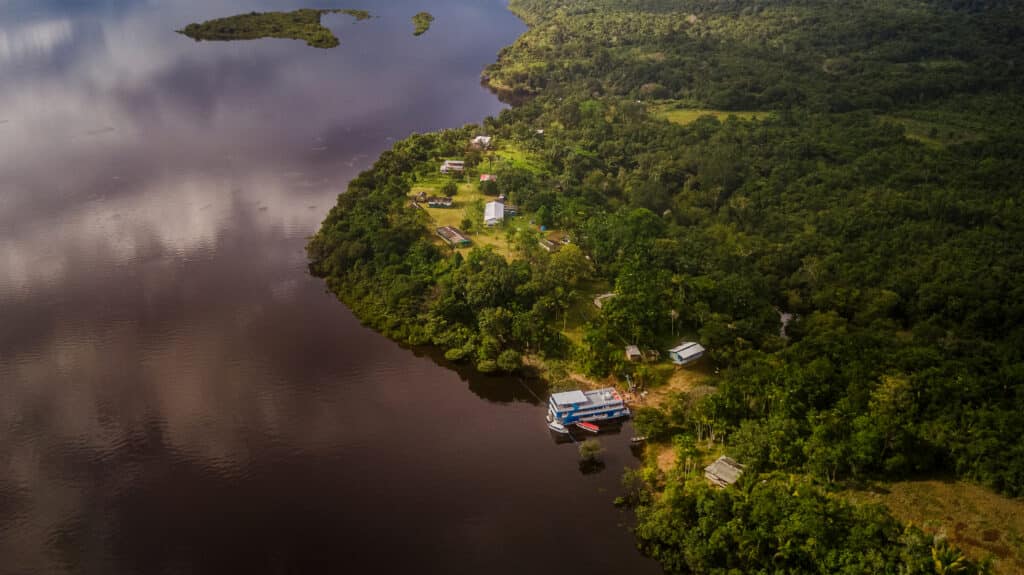
You might wonder: why, in a region filled with so much water, is access to clean water still such a struggle? The Amazon is vast, sparsely populated, and incredibly difficult to reach. Infrastructure projects that are simple in cities become massive logistical challenges in the jungle. Government investment often falls short, and maintenance of existing systems is nearly impossible in places with no roads, few resources, and little technical support.
Both hardship and resilience mark daily life in these communities.
“Every year in the Amazon, we have seen families go through flooding seasons but also severe droughts,” shares Sarah Rodrigues, JMI’s National Director in the Amazon. “During the floods, the water invades their homes and their crops, and animals break in seeking shelter. Then, during droughts, families living along creeks or branches of the river have to walk for miles just to find any water. Sometimes the creeks are so narrow that animals have died in them, and the water is unusable.”
Recent years have brought record droughts. In some areas, rivers dropped so low that navigation became impossible, cutting off entire communities for weeks or months. In 2024, UNICEF reported that more than 420,000 children in the Amazon were affected by dangerous water shortages, impacting their health and well-being.
Sarah adds, “In the last five years, droughts just keep getting worse and worse. Rivers that were never dry are drying up. We’ve seen families digging holes in the ground, trying to find any water they can, and usually it’s infected and not drinkable. It’s been our concern and our prayer that we would find a way to respond.”
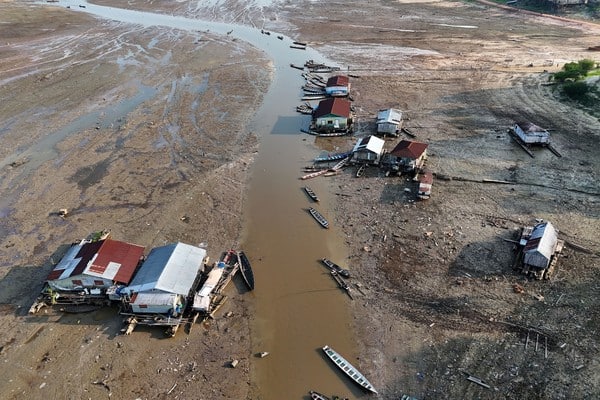
Amazon drought 2024
Real people, real needs
As our Justice & Mercy Amazon team traveled from village to village this year, we witnessed moments of joy as well as deep need.
We met a child named João. He’s a young boy who continues to battle sickness after sickness. When we met him, he came to our volunteer clinic, cared for by a team of Americans and Brazilians on a boat trip. Quickly, we discovered he had worms, among other illnesses, and the common denominator…unclean water. It’s affecting his health, his ability to go to school and learn, and so much more. If João had access to clean water–something that seems so small to us–it would change the reality of his whole life!
We also met an older couple, José and Maria. They’re a precious couple whose only access to water is the Amazon River itself. When they drink it, they become sick, and it continues to fill their bodies with infections. They believe their sickness has lessened, but in reality, it impacts their health in ways they don’t even realize. When they are sick, drinking this water makes them sicker. When they have an infection and they drink the water, the infection gets worse. If they had access to clean water–something that seems so small to us–it would make their quality of life much stronger and brighter!
These are just two examples of the many villagers we meet along the river whose lives are shaped by the lack of clean water. It’s heartbreaking to see something as essential as water, which is the very thing meant to give life, cause so much harm.
Clean water changes everything.
Truly, everything!
Access to clean water means better health. It means life-sustaining security during dry or rainy seasons. It means children can attend school, families can farm and build small businesses, and communities can thrive. Most of all, access to clean water opens doors to meet physical needs, but even more, makes a way to share about the living water, Jesus, and His story of grace, hope, restoration, and love. Access to clean water is a tangible miracle for these communities and the precious people who are part of them.
When a community gains access to safe, reliable water, outcomes include:
- Year-round access, even during droughts
- Healthier families and fewer waterborne diseases
- More time for children (especially girls) to attend school
- Stronger local economies and sustainable agriculture
- Open doors for spiritual connection and long-term development
Clean water doesn’t just sustain life, it transforms it!
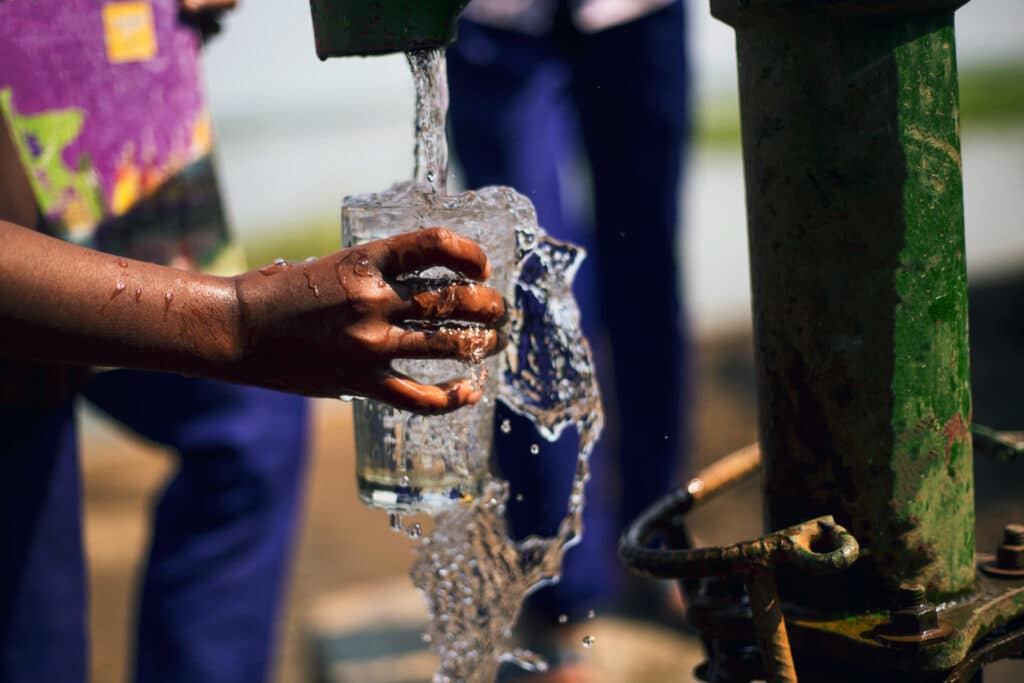
As an organization and as a people, we knew we needed to do something.
JMI’s Response
There’s a growing need for access to clean water in communities along the Amazon River. As our team travels west, we are seeing this need more and more. Over the years, we have been able to donate water filters to families, but it has come to a point where that is just not enough. Justice & Mercy Amazon is preparing to launch an expanded clean water initiative in 2026.
“As an organization and as a people, we knew we needed to do something,” Sarah says. “That’s why we started our water project, where we will partner with people like you, your churches, and other organizations to drill wells in strategic villages where families can come to the well and actually have clean water during the droughts.”
Our initial plan includes:
- Constructing at least three artesian wells to serve hundreds of people in multiple river communities. Each well will be maintained by local pastors and water committees who will oversee quality and hygiene education.
- Distributing household water filters in isolated areas where wells aren’t feasible—each filter providing up to seven years of safe drinking water.
These efforts are a tangible way to meet real, physical needs while opening the door to discipleship, relationships, and lasting hope.
The need for clean water in the Amazon is undeniable, and the impact of providing it reaches far beyond the physical. When families have safe, reliable water, health improves, children can focus on school, and communities begin to thrive.
Clean water is a gift of life and a reflection of God’s love. Together, we can bring this lifeline of hope and transformation to families across the Amazon.
UPDATE: Thanks to the outpouring of generosity on Giving Tuesday, we’re fully funded to build four wells next year! Since that project is now covered, we’re shifting future gifts back to our broader Amazon ministry. If you’d like to continue partnering with us, the form below supports every part of our work in the Amazon—pastor training, care for vulnerable families, and our expansion to the West in 2026.
 304 44th Ave. N