
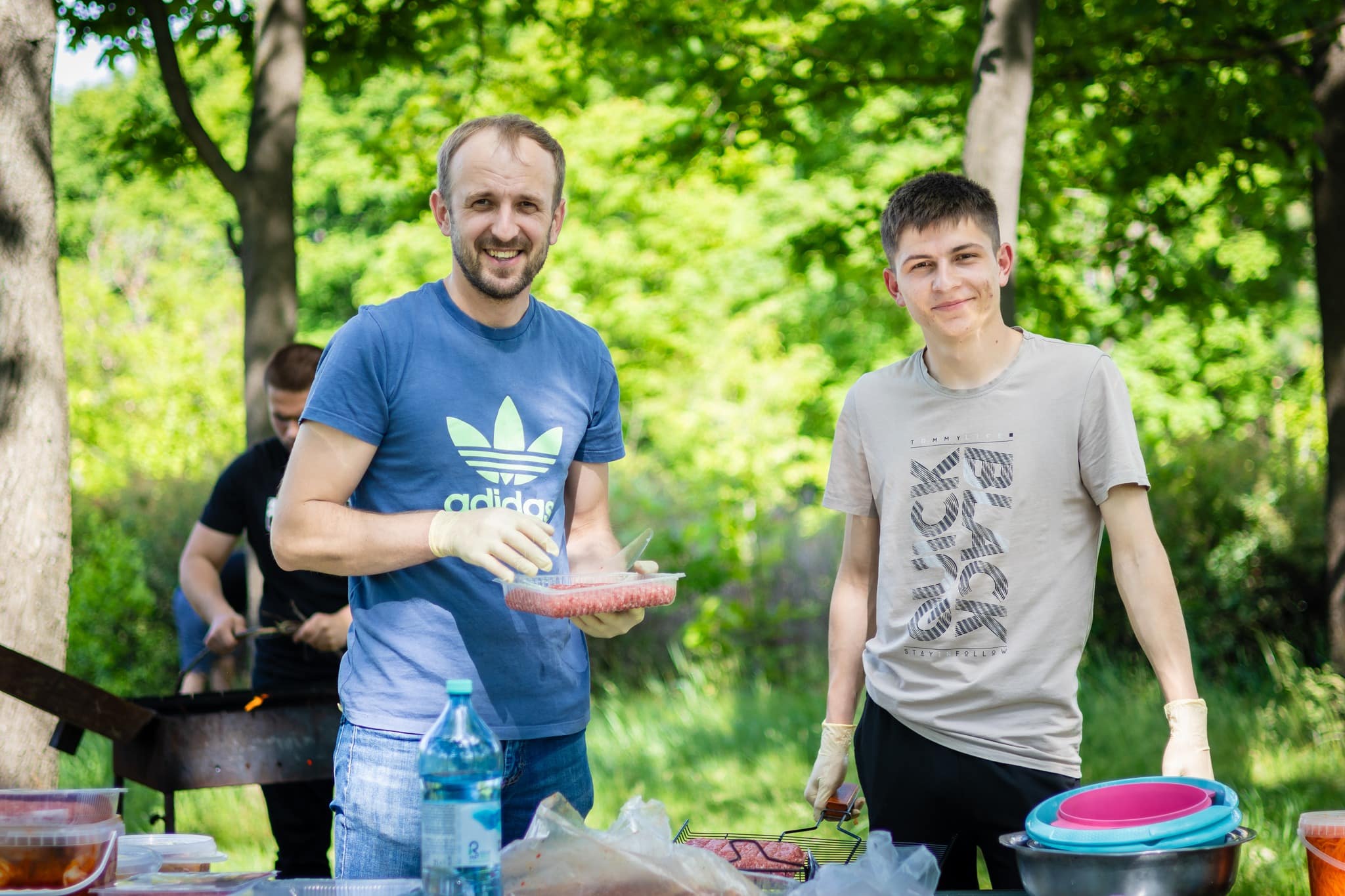
In Justice & Mercy Moldova’s Transitional Living program, house parents teach teenagers how to budget, cook meals, clean, and navigate city life after coming from hard backgrounds. More than just managing house rules and homework schedules, these leaders serve as the daily mentors and parental figures these youth never had. Below, two of our leaders share what it takes to guide vulnerable teenagers through real-life responsibilities and build a foundation for independence.
———————–
 Eugen Advahov – Boys2Leaders Chisinau House Parent
Q: How many years have you served in this role?
A: I have been working in this position for 4 years. I became the boys’ house leader after moving to a new city and because of my prior experience in similar roles at other institutions.
Q: How has this experience impacted you?
A: Now I can better understand the adolescents’ world, how they think, and their visions. After 4 years, I see teens differently, and it’s easier for me to find common ground with them.
Q: What does a typical day in your house look like?
A: A typical day is very unusual and interesting. Every day brings something new. I often think the boys can’t surprise me anymore, but every day they do. The day is full of life. The boys start coming home around 2 p.m.; we start by preparing meals, then they clean, and if there’s time, they rest a bit. Afterward, they work on homework if they have any. During this time, we also shop together for groceries and household essentials. I try to learn something new about each of them. Twice a week, we gather to read the Bible, and the boys ask questions.
Q: How do you build trust with teens from difficult backgrounds?
A: Trust can only be built when a teenager feels understood. To make each of them feel that, you need to spend quality time with them. There are different methods, and you have to find the one that works for each teen. Sometimes the best approach is to take a long drive with them or do something together.

Q: What is the biggest challenge in your role?
A: The biggest challenge is the first 5–6 months when a teen joins the program after living in their previous environment for 15–16 years. Each teen is different, with different life stories. At first, it is hard for them to adapt to city life, house rules, cooking, and cleaning. Teaching all these things is challenging at the beginning, but it is never impossible.
Q: What does being a “family” to these young people mean to you?
A: Most of the boys grew up without a father. It is hard for them to express themselves and open up to others. They seek my acceptance and validation of their decisions. They want to hear that someone appreciates them. I try to do for them what fathers do in families: play football, go fishing, so they feel cared for.
Q: How do you see God working in this ministry?
A: God has always cared for these children, and He works wonderfully in their hearts. Some accept God now, some later in life, but they understand that everything happening to them now is not by chance. Through this program, God changes their lives and hearts. They feel cared for and accepted as they are. Because of God, they have the opportunity to change their lives in every area.
———————–
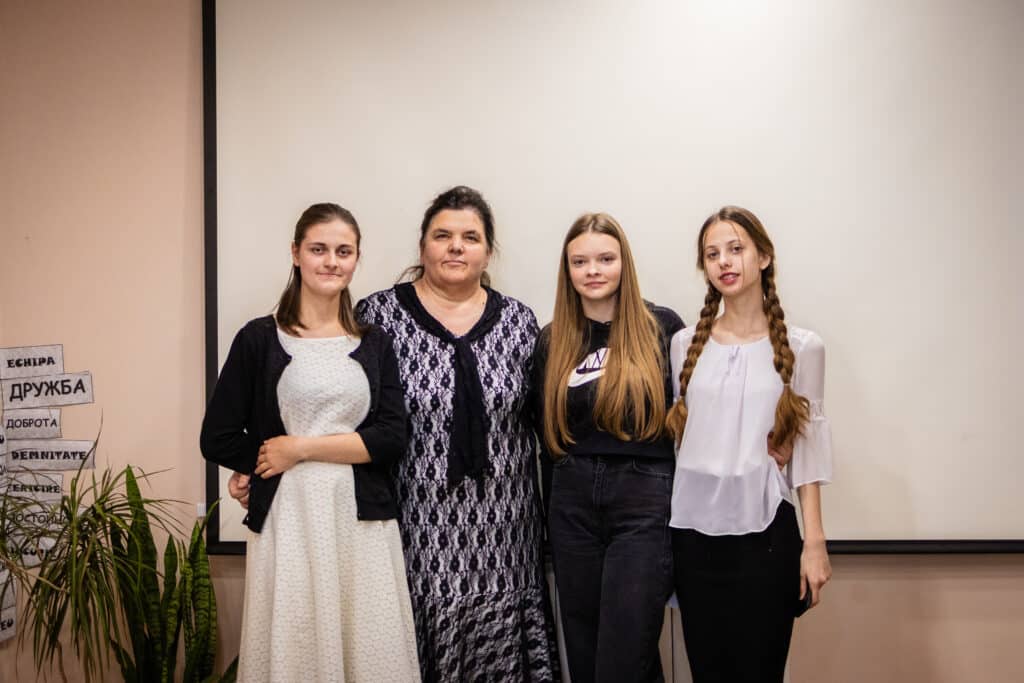
 Galina Sazichina – Grace House Bălți House Parent
Q: How many years have you served in this role?
A: In 2017, when a girls’ home was bought in Bălți, I was invited to work with the girls. I started out simply being with the girls, helping with cooking, and reading the Bible with them in the evenings.
Q: How has this experience impacted you?
A: Gradually, we grew together. I took on more responsibilities and learned how to improve the program. Today, I have a completely different perspective on the program and the organization’s work.
Q: What does a typical day in your house look like?
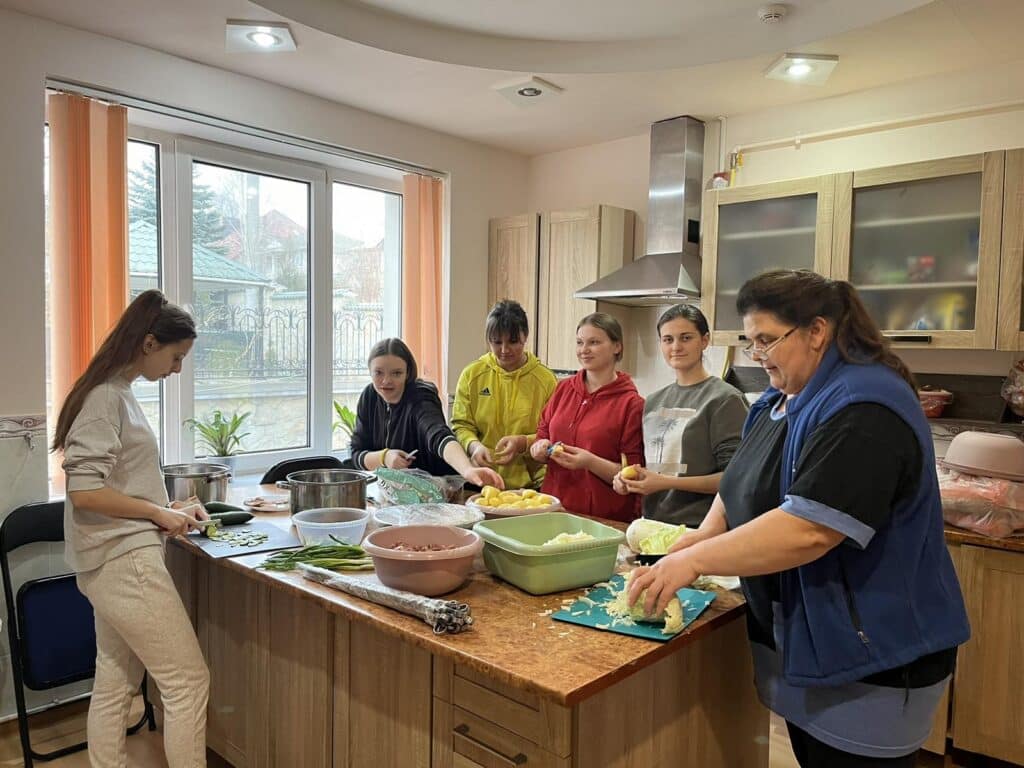
A: I have some free time in the morning, but not for long. The girls return from school at different times, starting from 12 p.m. The first to arrive starts preparing food for their room, and I talk with them and give tips. As others arrive, we continue cooking, talking, sharing good and not-so-good experiences, and building trust. I also prepare Bible lessons for evening gatherings or holiday and birthday activities. Sometimes we prepare games, songs, festive food, or decorations. We plan together, dream together. We also do cleaning, and I supervise, encourage, or assign tasks for volunteer work, and go shopping if needed.
Q: How do you build trust with adolescents from difficult backgrounds?
A: Show love to them and to everyone. Establish good boundaries, and be kind and honest so words match actions. Set an example in your own life. Pray for them constantly.
Q: What is the biggest challenge in your work?
A: Sometimes they exhibit challenging behaviors, or there might be disagreements. The challenge is not to take sides. You must always find balance in all relationships.
Q: What does being a “family” to these young people mean to you?
A: To love them, set an example, be patient and consistent even in difficult situations, and continue relationships with love. Listen, advise, help, and pray together.
Q: How do you see God working in this ministry?
A: God has united many people to sacrifice and help children. Through our mission, God reaches many young people and children. All of them hear God’s Word and read the Bible. Not all remain faithful to God after leaving the program, but God gives them the opportunity to hear, see life with God, and feel His blessings.
———————–
For Eugen and Galina, caring for these young people often happens in the day-to-day moments of taking a long drive to talk through a hard day, passing along sewing skills, or helping a teenager learn how to manage a home. Through prayer, patience, and showing up again and again, they are reminding young men and women that they are known, cared for, and never alone. Over the years, they have seen God use their consistent presence to build trust, grow confidence, and point teenagers toward Christ.
We are so thankful for all of our house parents in the Transitional Living program. What a gift it is to walk with these teens as they grow, take steps toward adulthood, and discover the hope-filled future God has for them.
 304 44th Ave. N